What is Recreational Soccer?
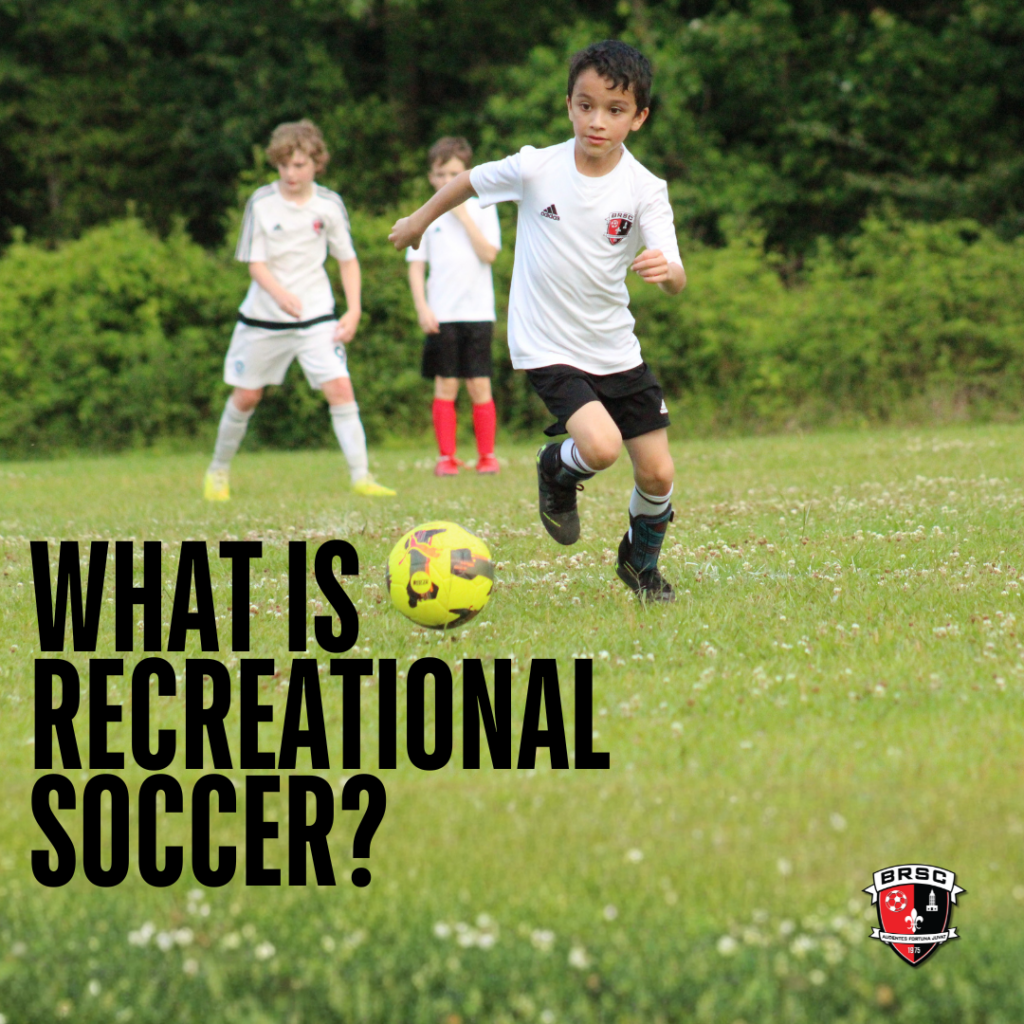
BRSC recreational soccer leagues are an introductory program devoted to the enjoyment of the game and the development of players. In our recreational league, the emphasis is on fun, learning how to play the game, and developing lifelong skills. Our leagues welcome players of all skill levels and abilities. Players should be free to make mistakes without feeling high-level pressure from coaches and parents to win.
Our hope is for parents to ask children if they had fun after the game. Positive reinforcement of recreational players is critical to their enjoyment of the game and benefits the child much more than discussing mistakes.
Winning games is never more important than creating a positive experience for every player. Children learn best when they feel encouraged to try new things, make mistakes, and continue improving. Our goal is to help players develop a lifelong love of the game while creating memories that keep them excited to return each season.
BRSC Recreational Soccer Leagues is a Volunteer-based program
BRSC Recreational Soccer is made possible by dedicated volunteer coaches and team managers. These volunteers are parents, family members, and community members who generously give their time to help create a positive experience for our players.
You do not need previous soccer or coaching experience to volunteer. BRSC provides coaching resources, training opportunities, and support throughout the season. The most important qualifications are a positive attitude, a willingness to help, and a commitment to ensuring every child has fun while learning the game.
Volunteer coaches play a critical role in creating an environment where players feel welcomed, encouraged, and excited to participate.
If you are interested in coaching a recreational team, please contact Recreational Director Caleb Bush at cbush@brsoccer.org.
The Benefits of Recreation Soccer
- No travel required
- Play with classmates, neighbors, and friends
- Guaranteed playing opportunities for all players
- A fun and welcoming introduction to soccer
- Age-appropriate instruction focused on fun
- An environment that encourages confidence and creativity
- Opportunities to develop teamwork, leadership, and sportsmanship
- A positive foundation for future participation in sports
Whether your child is kicking a soccer ball for the first time or returning for another season, BRSC Recreational Soccer provides a fun, supportive experience that helps players grow as athletes and as people.
To register for our Fall Recreational Leagues, click here.
Mid-year Checklist for Players Going to College

I hope that all is well heading into the holiday season, and all is well with you and your families.
This month I would like to put out a checklist for those who have kids headed off to college next year. We want to be sure that these kids are eligible for participation right away, and double-checking these items is a benefit for them and the institution they will attend as a student-athlete.
1. Core Courses- Get together with your high school guidance counselor and be sure that all core course requirements are covered. For those that have some left to do their senior year, they have to have adequate grades in these courses for them to count. Staying on top of this is a critical piece for both the player and the program.
2. Financial Aid- Make sure all items for financial aid have been turned in by the appropriate dates. Being in communication with the school in this regard is very helpful and essential to make sure all this information is up to date. Also, be sure that your student-athlete is applying for grants and scholarships that are out there, both public and private. Most of these require writing a document about a topic and vary from one year to four years.
3. Be certain applications to all the schools you are interested in have been submitted. The college/university will be going through thousands of applications. The earlier that you can get them in, the better. Also, it is an excellent plan to have the coach of your program contact the admissions office to let them know to expect your application and be on the lookout for it. Most coaches have a person they go through that they rely on to help with the process for their program.
4. Be sure to update any information with the NCAA clearinghouse for players interested in going to play at Division 1 and 2 institutions. Keeping your information current helps the school’s compliance officer(s) get through their process more efficiently and effectively. If you have already narrowed down the process for your school, an official visit may be a part of the process. Make sure you know what the expectations are for that visit, as this varies at institutions based on the school’s budget
Defending Numbers Down (2 vs. 1)

2 vs. 1 + 1 Defending Numbers Down (recovering player)
Teams must alternate services
- Player (red 1) passes to two yellow players and sprint out to defend.
- As the pass is made, player (red 2) sprints through the opponent’s goal to become the second defender
- The server switches to the side and the recovering player goes to the back of the line.
College Recruiting – Email Do’s and Don’ts

As the head coach and strength and conditioning coach at MCLA in Massachusetts, Deb Raber took the time to share some tips with BRSC regarding emails that she receives from potential student-athletes.
When receiving emails at the rate that she does, there are some key points she looks for from athletes interested in playing for her program.
- When an athlete wants Coach Raber to come to see them play, having the name of the team, they are on, and their tournament schedule for the matches is essential. As well as the uniform number, colors worn, and position that the athlete will be playing are crucial pieces of information.
- If you are sending a letter, Coach Raber wants you to know who you are and get to the point of what your message regards. Long and lengthy is not the way to go.
- When you send a letter or an email, show that you have done research about the school and the program and individualize the correspondence. Form letters and vague references are not the way to impress coaches.
- Be sure that as a player and a parent, you show knowledge of the rules of contact with the coach. For example, you can’t expect a response when coaches are not able to reply due to NCAA/NAIA guidelines.
- Talk about the school, not just the soccer program. Show that you are looking at the school, and overall experience is as valuable as your interest in soccer.
The discussion with Coach Raber reminded me of many of the same concepts of going through emails that I went through when recruiting at the collegiate level. As coaches, we want to build a program that is not only successful on the field but also is involved in the community and gives the athletes the best overall experience possible.
Young people go to college to become prepared for life in the professional field that they want to be in when they have moved into the working world. How programs are built, and the quality results they give to our young people in both the athletic and professional development sense is essential and shows the quality of the program. When our young athletes are looking at coming to a particular program, their interest in these aspects will show in their correspondence and approach to coming there initially. These are the character pieces that many coaches are looking for in players.
Parent Your Best on the Sidelines

As a parent, you love your kid, and you want nothing more than to see them succeed. Sometimes your love and good intentions are harming your child, the coach, the game officials, and other players on the field. As parents, you have one critical role once the game has started, clap for the players on the field.
As Reed Maltbie points out in his article, It’s Time to End the Sideline Sportsanity, “overzealous cheering can easily lead to coaching.” Often, parents don’t realize they’re coaching from the sidelines. Action words such as go, run, get the ball, and pass is all forms of coaching. Remember, your child has a coach. They want to see your child succeed as well and will work with them in games and practice to bring the best out of your child.
If you still find it hard to avoid coaching from the sideline, Maltbie has several excellent recommendations.
- Wear headphones – I coached a player whose dad always wore headphones. He said he was a once high level athlete and a former coach, so the urge to intervene was off the charts. He wore headphones to keep from “sideline coaching”. They also served a second purpose, he said, “I don’t have to listen to all the other parents”.
- Be the team photographer/videographer – You’ll be too busy finding the perfect shot of everyone’s kid to be yelling. You may even gain an appreciation for all the players on the team. If you film a game and hear your screams on the playback, you will probably never yell again.
- Carry lollipops – Sounds funny, but effective. If you feel the urge to speak your mind, fill that gaping void with something to keep words from coming out of it. I’ve heard of sports teams assigning ‘lollipop parents’ whose jobs are to hand out lollipops to those who yell.
- Sit in the corner – literally. The same dad who listened to music would also sit away from everyone in the corner of the field. He could watch the game but not get caught up by the emotions on the field and the even more intense emotions on the sidelines. I am convinced there is a direct correlation between how close you sit to the action and how much you need to intervene during games.
- Have a yell jar – Pass a jar at games. When you yell, you pay. Use the money to buy all the kids ice cream. You could alter the amounts based on the infraction: yelling instructions is a buck, yelling at the coach is two bucks, berating the ref is a 5 spot, screaming at the kids is a sawbuck.
- Offer to be the “keeper of the culture”. My wife played this role very well. She once dealt with a pair of new parents to our club. They were Sniper Parents yelling shoot at every touch of the ball and when the child would mess up, they would bellow “What were you thinking”. She finally marched up to them and asked them if they liked having people yell at them. She said “we don’t yell at 11 year-olds at our club. This is not our culture”. That became a theme for us- keep the culture. We actually had players come to tryouts to join the club that policed its sidelines. If you have strong club values – offer to guard them.